
Wondering how to prepare an area before building construction?
Then, you are in the right place. A poorly built building pad is like trying to make a house on sand. It may look fine at first, but it can lead to foundation problems over time. Hence, proper pad construction is essential for long-term stability and safety.
Followingly, let us walk through the full process of building pad construction in North Texas.
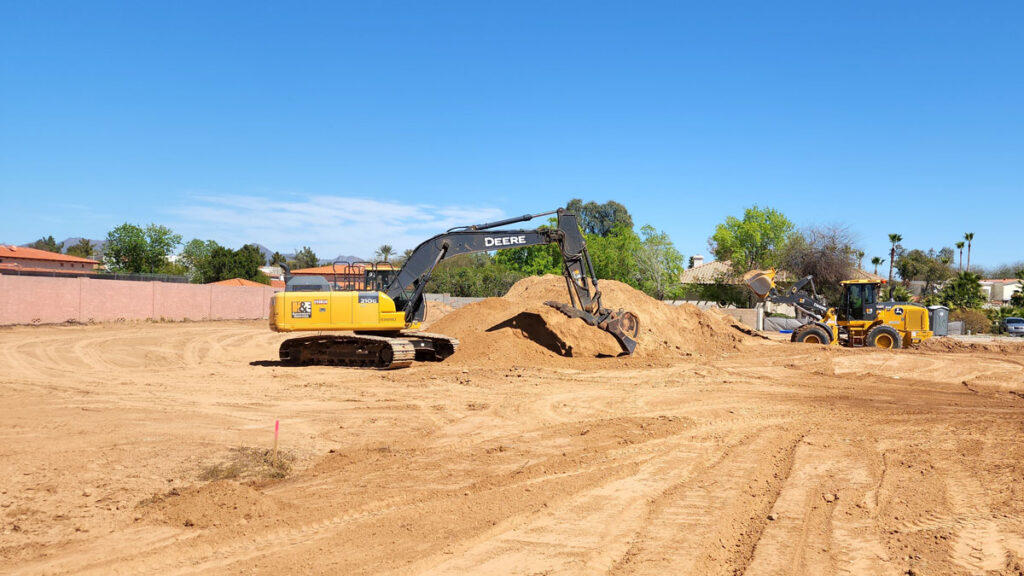
7 Steps for Building Pad Construction in North Texas
Building a strong pad requires careful planning and execution. Here is a step-by-step guide that professionals follow:
- Site Clearing and Marking
Builders first remove all trees, rocks, and debris from the site. The topsoil and organic material must be stripped away because they can decompose or shift over time, undermining the pad’s stability.
After clearing, they use stakes and string lines or marking paint to mark the boundaries and footprint of the pad.
Read Also : From driveways to drainage, why gravel delivery is booming in Oklahoma
- Excavation and Subgrade Preparation
Then, the professionals excavate the site down to stable subsoil and remove unsuitable soils such as clay or loose fill. The goal is to reach firm ground that can support heavy loads without shifting. Then, they compact the exposed subgrade to maintain proper moisture levels and density.
- Bringing in Fill Material
This is an optional step. If the site is uneven or too low relative to the surrounding area, suitable soil must be added to raise the pad. Most builders avoid organic-rich soils and use stable fill that can support structures.
- Grading and Elevation Adjustment
Once done, they grade the pad to the proper elevation. The goal is to raise the pad slightly higher than the surrounding land to help with drainage and prevent water pooling. Builders also ensure to maintain a slight slope on the surface so water runs in the desired direction. Poor drainage design can lead to water intrusion and future foundation problems.
Read Also : Top Material Used in Building Pads How They improve structural integrity
- Base Layer Installation
For many building pads, especially for concrete slabs or heavy structures, a base layer of gravel or crushed stone is added over the compacted fill. This layer improves drainage and provides a stable base. Most builders use angular stone rather than rounded rock, as it locks together and stays stable under weight.
- Compaction
This is the most vital step for building pads in North Texas. Each layer that has been created must be thoroughly compacted. Professionals use mechanical compactors and often conduct compaction testing if required.
Proper compaction prevents uneven settlement. After final compaction, they wet the pad slightly to enhance its stability and make it fail-safe.
- Final Grading, Drainage Setup and Inspection
Lastly, they perform a final grading to ensure the surface is properly sloped for drainage. Builders also install culverts and drainage channels if needed. A final inspection ensures that the pad meets all structural requirements.
Read Also : Mason Sand V/s Cushion Which is the right for your project
Should You DIY or Call the Pros for Building Pads in North Texas?
Building pad construction required experience and access to specific equipment. Thus, calling the pros is surely the smart choice. York Enterprises, the trusted solution for building pad requirements in North Texas and Southern Oklahoma, provides:
- Expert site preparation and grading tailored to local soil and drainage conditions
- Access to quality aggregate materials and proper compaction services
- Professional handling of clearing, fill, grading, moisture control, and pad shaping
Final Words
A quality building pad construction in North Texas begins with careful clearing, correct fill and compaction, proper drainage design, and thorough inspection. Investing in the right steps at the start ensures your structure will stand stable and dry for years.